Search
How to Break into Publishing: Four Lessons From My Path Into the Industry
I want to tell you how I came into this career — not because my story is unusual, but because I think there are lessons writers can take from it.
I started where many of you started. I wanted to be a writer.
I was living in Paris in a tiny garret apartment, trying to write books that were, in retrospect, the wrong books for me. They weren’t bad ideas. They just weren’t quite mine yet.
Eventually I accepted that, pivoted, and took a job at HarperCollins. I thought I was overqualified. I had an English literature degree and dreams of a literary career.
And suddenly I was shipping boxes in the mailroom.
But something surprising happened because I was there.
I found myself on elevators with extraordinary people — the authors of Freakonomics, historians like Douglas Brinkley.
I was watching a masterclass in what publishing actually does: how a book moves from an idea in someone’s mind into an object in someone’s hands, and why that matters.
I realized my real calling wasn’t to be the writer in the room. It was to be the person who champions writers — who builds careers and knows how to translate an author’s vision into something an entire industry can get behind.
That understanding didn’t make the path easier.
I was rejected from agencies, over and over. When I finally found my footing, I did it by scouring the slush pile, seeking out writers in the wild, and building my own reputation as an agent who could spot a book before anyone else did.
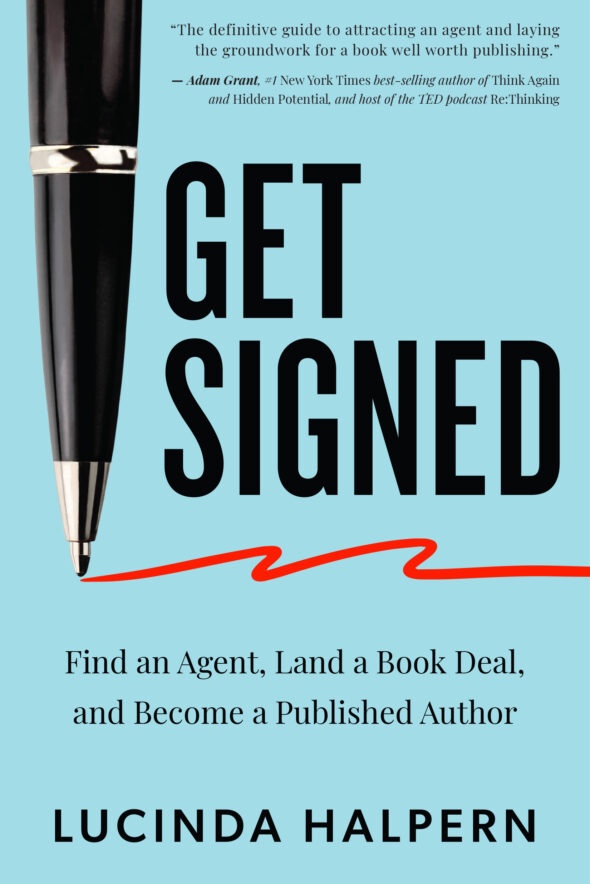
A decade later, I was positioned to write one myself: Get Signed: Find an Agent, Land a Book Deal, and Become a Published Author — the book I wished had existed when I was starting out.
Four things that journey taught me — and that I think about every day when I’m working with writers:
There is always a side door. Publishing is built on relationships and referrals. The fastest entry into this world almost always runs through someone already inside it. A writing conference. A mutual introduction. A newsletter that gets the right person’s attention. The front door is crowded. The side door is usually open.
Rejection is part of the apprenticeship. I was turned down everywhere before I found the one person who believed I could do the work. That pattern repeats across every writing career I’ve ever witnessed. Persistence isn’t a consolation prize — it’s the actual requirement.
Authority often arrives before confidence. My first major deal happened when I barely felt ready. I had to step into the version of myself I was still becoming. Writers do this too. You don’t wait until you feel certain. You write into the uncertainty, and the confidence follows.
Timing is a skill you can practice. Agents are scouts. We are always looking for writers whose topics intersect with the cultural moment — people paying attention to what readers are hungry for. The strongest book ideas aren’t conceived in isolation. They take shape at the intersection of personal expertise and something larger happening in the world.
The path is rarely linear.
The job you think is beneath you can become the room that teaches you the most. The rejection you think is closing a door may simply be redirecting you toward the editor who will understand your work in a way no one else could.
What matters is staying close enough to the conversation to recognize opportunity when it appears. Paying attention not only to the book you want to write, but to the cultural moment around it. What are people asking? What are they afraid of? What do they need to understand? Where does your expertise, your lived experience, your story meet something larger than yourself?
We are looking for writers who are paying attention, building authority, and refining their idea until it becomes both deeply personal and commercially clear.
If you’re in a season where the path feels unclear, take heart. The wrong turn may still be useful. The side door may still be open. And the idea you’re carrying may be closer to the right moment than you think.
I wrote Get Signed because I wanted writers to have the full map — the one I had to piece together over years of rejection, relationships, and hard-won deals. If you’d rather listen than read, the audiobook is available here. Everything covered in this post goes several layers deeper there.