Search
Lucinda Literary Turns 15
Fifteen Years, Three Chapters
On building Lucinda Literary—and becoming who I needed to be before I felt ready.
This month marks 15 years of Lucinda Literary.
I keep thinking about this milestone not as a straight timeline, but in five-year chapters—because entrepreneurial careers don’t unfold neatly. They loop. They stall. They demand reinvention. And often, they ask you to believe in a future version of yourself long before you have proof you’re allowed to become her.
Here’s what those chapters looked like for me.
Years 0–5: The Leap Before the Landing
In the beginning, I ran a publicity business to support the gamble of agenting. It wasn’t the plan—it was the bridge. Deep in my bones, I knew I wanted to be a literary agent full-time: to build books from the ground up, to edit deeply, to develop ideas with care and rigor.
During those early years, I met writers who would shape not just the agency, but my life—clients like Chris Bailey, Susan Peirce Thompson, and Nicola Kraus. They remain with me today, and have become dear friends. At the time, none of us knew how long the road would be—only that the work mattered.

Years 5–10: The Hard Years
These were the years that nearly broke me.
I took the leap to agent full-time just after having a newborn. I signed the wrong clients—and paid dearly for the time lost. I rented a single room in my father’s office and stared out at taller buildings, wondering if I had misjudged my place entirely.
I pounded the phones—back when cold calling was still a thing—and got nowhere. Rejection after rejection. Silence. Doubt. I seriously wondered if quitting would be the smarter, more responsible choice.
And yet—this was also when I met writers like Cait Flanders and Paul Jarvis. Together, we decided to build something new: a speakers bureau. I hired my first employee, Connor Eck, and learned what it meant to lead, not just survive.
Slowly—almost imperceptibly—the editors I had cold-called years earlier began to return my calls. Those early conversations turned into long-lasting relationships. I became their best student, watching closely how they cared for authors, how they shaped books, how they played the long game.

Years 10–15: The Golden Years (Unexpectedly)
These years became golden—not because they were easy, but because they were built on everything that came before. And they arrived in spite of a global pandemic.
With a larger team behind me, I built the next division of the company alongside Julia Collucci, teaching writers what I had learned the hard way. We turned hard-won knowledge into education and coaching that reached writers around the world.
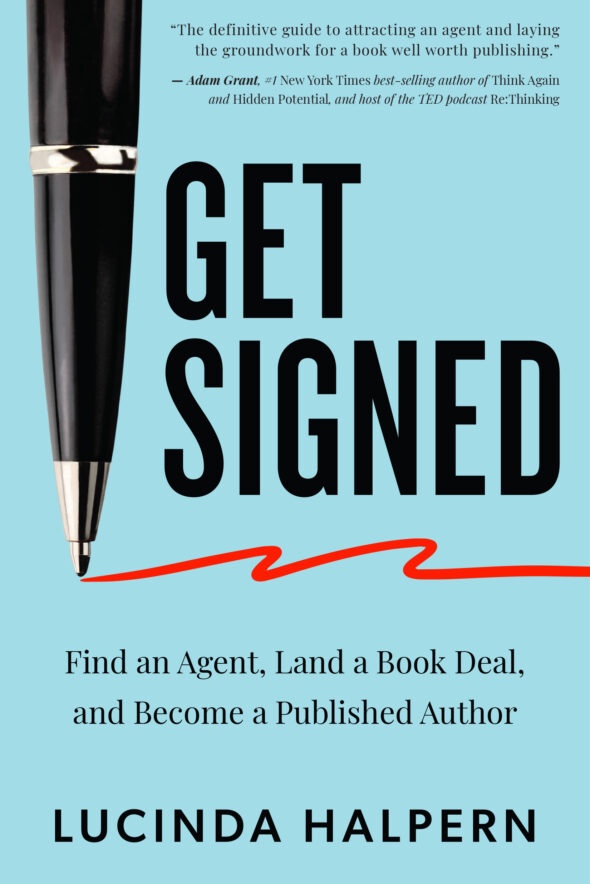
Then came Get Signed.
On the agency side came more clients, more bestsellers, and the expansion of our agent team—including the deeply talented Lauren Eldridge, Kelly Bergh, and Craig Pyette.
What surprised me most wasn’t the growth—it was the steadiness. The sense that the foundation had finally caught up to the vision.
What Fifteen Years Taught Me
Perseverance isn’t just about endurance.
It’s about redefining what failure and success actually mean.
If you don’t give yourself to the future self you know you’re meant to become—before the credentials, validation, or certainty arrive—you simply won’t get there.
And if you’re in your hard years, hear this clearly:
You’re not behind.
You’re building something that lasts.
Fifteen years in, I know this for certain: the chapters that feel the most uncertain are often the ones doing the deepest work.